Historical fiction civil war
Historical fiction civil war literature is a category of novels that replays the American Civil War, 1861 to 1865, through imagined characters placed in documented battles, courts, farms and towns of that era. The Great Divide by Ann Rinaldi, author of the Salem trilogy, is the work this page uses as its reference point: a Civil War novel built around one family split by the conflict, and it anchors a body of historical fiction that also reaches back to the Salem witch trials of 1692.
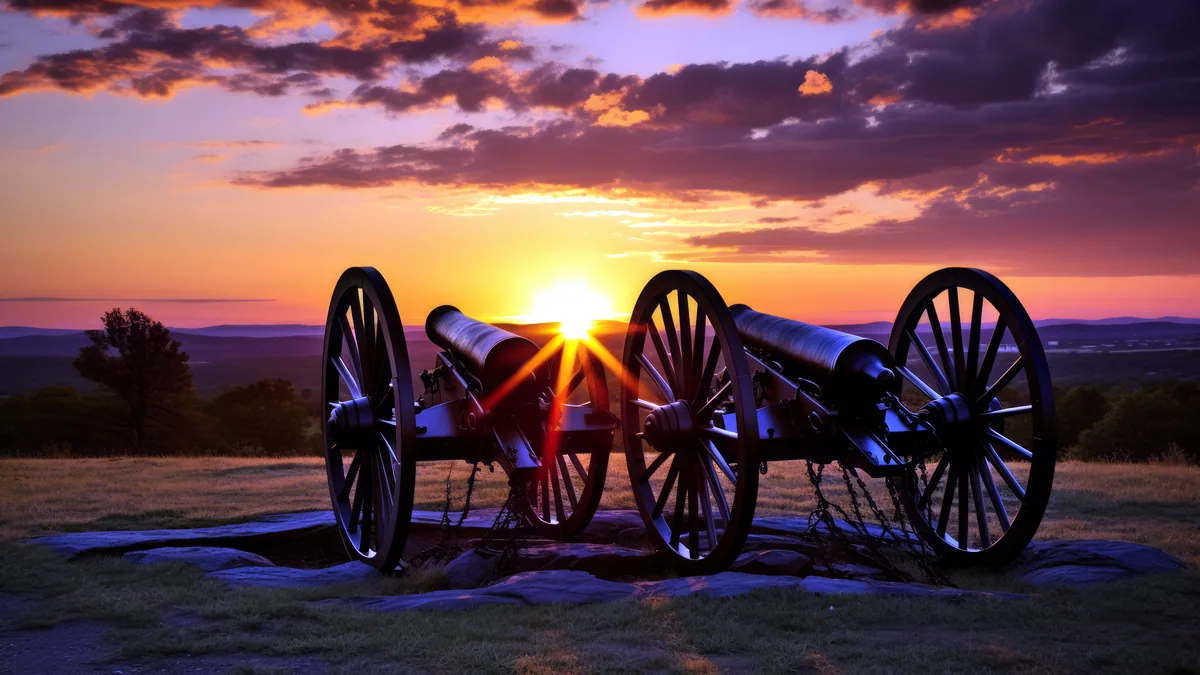
Readers who arrive looking for Best historical fiction 2025 picks often land on Ann Rinaldi's catalogue because her novels are frequently cited in the same long lists that track the genre's steady readership. The list below treats her output as a single shelf, 10 titles across 2 categories, and then traces the research that turns each plot into a sourced story. Screen and stage versions of Civil War stories, the Historical fiction films that have carried the era to wider audiences, are mentioned only where they help locate where Rinaldi's own books sit in the genre's map.
Ann Rinaldi as a historical fiction author
Ann Rinaldi is a historical fiction author whose work has covered two American episodes, the Salem witch trials and the Civil War, across a 10 book output published over roughly 3 decades. The table below is the complete list of her books as it stands on her site, ordered from the earliest titles to the most recent, and the rows give each title, its series, its year of publication and its subject. This is the shelf a reader needs before any discussion of craft, because every later section on research, sources and adaptations is a property of one of these 10 titles.
| Title | Series | Published | Subject |
|---|---|---|---|
| The Witch of Salem | Salem trilogy | 2000 | Salem, 1692, through 3 girls accused of witchcraft |
| The Hangman's Daughter | Salem trilogy | 2001 | The executions at Gallows Hill and their aftermath |
| The Trial of the Faithful | Salem trilogy | 2002 | The court's closing months and the reversal of the accusations |
| Witch of Salem | Salem reissue line | 2004 | A revised, retitled edition of the opening novel |
| The Witch's Apprentice | Salem spin-off | 2005 | A later generation in Salem and the lingering fear of accusation |
| The Hangman's Daughter: A New Edition | Salem reissue line | 2006 | Reissued text of the 2001 second novel |
| The Witch's Curse | Salem spin-off | 2007 | The 1692 accusations as seen from the families who survived them |
| The Great Divide | Standalone | 2010 | The American Civil War through one divided family |
| The Witch of Salem: A Novel | Salem reissue line | 2012 | A trade reissue of the trilogy opener for new readers |
| The Witch's Price | Salem spin-off | 2014 | The long tail of the trials, 1692 to 1697, and the restitution era |
Her first break, The Witch of Salem
The Witch of Salem is the novel that made Ann Rinaldi, author, a name in historical fiction, and its story begins in Salem, Massachusetts, in 1692 with 3 young women who are accused of witchcraft. The book is a Young Reader's Choice Award novel, a reader-voted honor that first surfaced it to the young-adult shelf, and the plot follows the accused girls through the examinations, the arrests at Danvers and the build-up to the hangings at Gallows Hill in the summer of 1692. The 3 main characters are Abigail, Mary and Mercy, and each one holds a different position inside the court's logic: one pleads, one confesses, and one is pushed into a silence that the court reads as guilt. The novel's engine is the spectral evidence, the testimony that a vision of a ghost was admitted in 1692 and withdrawn in 1693, and the book keeps that legal shift at the center of its middle third. What a reader should take from the section is that Rinaldi's method, the same method she later applied to the war years, was to take one legal or social mechanism and make it the thing the characters live inside, not the backdrop they walk past.
The Civil War novel, The Great Divide
The Great Divide is the Civil War novel in Ann Rinaldi's list, and it tells the war through one family whose two sons end up on opposite sides of the line. Published in 2010, it is the book that answers the searchers looking for historical fiction civil war stories that are family-driven rather than battle-driven, and its 4 main threads are the enlistments, the letters, the home front, and the 1 reunion scene that closes the arc. The novel's central image is a divide, the geographic and the political at once, and each chapter moves one son closer to the other's world, until the two meet at the novel's end as men the war has finished making. The setting spans the 4 years of the conflict, 1861 to 1865, and the book keeps its scenes anchored to documented places, a farm, a rail line, a field hospital, so that the imagined dialogue sits on a real map. For a reader comparing it with the genre's larger war shelf, The Great Divide reads as the small-scale answer to the big-battle novels, and its place on this shelf is the entry that keeps the family as the unit of history rather than the army.
The research and sources behind the books
The research behind Rinaldi's historical novels rests on 3 layers of source, the court record, the personal record, and the place record, and each layer feeds a different part of the page the reader is reading. The table below maps those 3 layers to the 2 subject eras in her work, and the rows show what each source type supplied to each book's world.
| Source layer | Salem, 1692 | Civil War, 1861 to 1865 |
|---|---|---|
| The court record | The 1692 trial transcripts and the 1693 withdrawal of spectral evidence | The muster rolls and the pension files that fixed who enlisted where |
| The personal record | The diaries and letters of the Salem families, including the records that name the accused | The soldiers' letters that carried the war home to the farm and the field hospital |
| The place record | The town plans of Salem and Danvers as they stood in 1692 | The rail lines, the farm towns and the battlefield maps of the 1861 to 1865 campaigns |
The pattern across both eras is the same: the legal mechanism, the court in 1692 and the enlistment in 1861, is taken from the record and turned into the structure the characters are forced through, and the personal record is what gives the structure a face. The place record is the layer that keeps the geography honest, and it is the layer a reader can test the book against by opening a map of Salem or a campaign map of the war years. The sources behind the books are cited in the text and in the back matter of each volume, and the same 3 layer model is the working method from the 2000 trilogy opener through the 2014 close of the spin-off line.
Where the books stand in the shelf
The books sit on a shelf that runs from the courtroom era of the Salem witch trials to the war era of the 1860s, and the 2 anchors on this page, The Witch of Salem and The Great Divide, are the 2 poles of that range. A reader who starts with the Civil War pole and works backward lands on the Salem pole, and the reverse path works the same way, because the 3 layer research model is shared, and the family-as-unit method is shared. The list of 10 titles is the whole shelf, and the 2 novels named in the search intent are the 2 doors into it. The section ends on the shelf itself, because the next step for a reader is to pick one of the 2 doors and read from there, and the research notes in each volume carry the reader from the plot into the record that built it.
Where to start
 1. START HEREBest historical fiction 2025The best historical fiction of 2025 is a short list of novels that reset the year's bar for research, voice and stakes, led by The Heaven & Earth.
 2. START HEREHistorical fiction filmsHistorical fiction films are feature movies that dramatize stories set in a real past, built from novels, memoirs, diaries or archival record.
 3. HISTORICAL FICTION BOOKSWWII historical fictionAnn Rinaldi wrote 14 books, and her 3 World War II historical novels anchor that shelf: The Silver Lining (2014).
Historical-fiction book lists organized by historical period
 HISTORICAL FICTIONHistorical fiction for young readersHistorical fiction for young adults is a shelf of novels set in documented pasts, written for readers roughly 12 through 18.
 HISTORICAL FICTIONHolocaust novelsAnn Rinaldi never wrote a Holocaust novel. That is the honest answer to historical fiction holocaust books.
 HISTORICAL FICTION ABOUTRevolution War novelsHistorical fiction about the Revolutionary War is a genre of novels that sets invented characters inside the real events of the American Revolution.
 HISTORICAL FICTION GREATGreat Depression novelsHistorical fiction great depression is a branch of the historical novel in which the setting is the 1929 to 1941 downturn.
Historical-fiction book lists organized by geographic
 HISTORICAL-FICTION BOOKHistorical fiction irelandHistorical fiction set in Ireland is a body of novels that carries readers through the island's own centuries.
 HISTORICAL-FICTION BOOKHistorical fiction japanHistorical fiction set in Japan is a genre of novels and novellas that rebuilds a real era of Japanese history around invented characters.
 HISTORICAL-FICTION BOOKHistorical fiction egyptHistorical fiction Egypt is the branch of the historical novel that takes its setting from Egypt.
 HISTORICAL-FICTION BOOKHistorical fiction indiaIndia historical fiction is the branch of historical fiction set in India.
 HISTORICAL-FICTION BOOKHistorical fiction chinaHistorical fiction set in China is the genre of novels that stage the country's long dynastic history.
 HISTORICAL-FICTION BOOKHistorical fiction englandHistorical fiction set in England is a body of novels that dramatise real places, monarchs and institutions of England and, in its broader form.
 HISTORICAL-FICTION BOOKHistorical fiction hawaiiHistorical fiction hawaii is a body of novels set in the Hawaiian Islands whose plots move through the monarchy, the 1893 overthrow of the kingdom.
Historical-fiction book lists organized by format, audience
 HISTORICAL FICTION ROMANCEHistorical romance novelsHistorical fiction romance books are love stories that place their couple inside a documented past.
 BEST HISTORICAL FICTIONHistorical fiction audiobooksThe best historical fiction audiobooks are 3 narrated novels that pair a deep historical canvas with a cast of actors who can carry period dialogue.
 HISTORICAL-FICTION BOOKHistorical fiction kindle unlimitedThe historical fiction Kindle Unlimited library is the rotating shelf of era-set novels that a Kindle Unlimited subscription makes readable at no extra.
 HISTORICAL FICTION KRISTINIf you like Kristin HannahKristin Hannah is an American author of historical and literary fiction.
Historical-fiction book lists in a specific language
 HISTORICAL-FICTION BOOKHistorical fiction in spanishHistorical fiction in Spanish is a novel written in the Spanish language whose plot is set in a past period that the author has researched.
 HISTORICAL-FICTION BOOKHistorical fiction in frenchHistorical fiction in French is a body of novels written in the French language that re-creates a past era through invented characters.
All pages in Books
 BEST HISTORICAL NOVELRinaldi book listAnn Rinaldi's book list is the complete catalogue of historical fiction for book clubs built by the American novelist who wrote 17 novels across 4.
 ALL PAGES IN BOOKSBest historical fiction 2026The best historical fiction of 2026 is the set of new historical novels published this year that readers, critics and award committees rank at the top.
 HISTORICAL FICTION IDEASRinaldi research methodAnn Rinaldi's research method for her historical novels begins with historical fiction ideas that start as concrete.
Other sections
Inherited addresses in this section
/docs/Rinaldi_books.htmlRinaldi book list